




Threats don’t wait for business hours, and most teams don’t have enough security staff to watch every alert. That’s why so many companies look at managed detection and response vendors instead of trying to build a full security operations center on their own.
In simple terms, MDR is a service that combines 24/7 monitoring, human analysts, threat hunting, investigation, and response help. A good MDR provider doesn’t only tell you something looks odd. It helps figure out what’s happening, how serious it is, and what to do next.
That matters because alert fatigue is real. When your team is buried in noise, the signal gets lost. The sections below break down what MDR vendors do, how to compare them, which names lead the market in 2026, and how to pick the right fit for your business.
What managed detection and response vendors actually do
Managed detection and response vendors act like an always-on security team for companies that need more than software. They watch activity across your systems, sort through alerts, look for attacker behavior, and step in when something needs fast action.
Strong MDR services usually cover more than laptops and servers. Many also watch cloud workloads, email, identity systems, network traffic, and SaaS tools, because attackers rarely stay in one place.
How MDR works from first alert to full response
The process starts with telemetry. The vendor collects data from tools and systems across your environment, then checks alerts to separate routine noise from real risk.
If analysts spot something serious, they investigate the chain of events. They may trace a suspicious login, review a PowerShell command, or connect a phishing email to endpoint activity. From there, response can include isolating a laptop, disabling a user account, or blocking malicious traffic before ransomware spreads.
 Good providers also help after containment. They share root cause details, cleanup steps, and recovery guidance, so your team can close the gap that let the attack in.
MDR vs EDR, XDR, and MSSPs, what is the difference
These terms get mixed together all the time, but they aren’t the same. EDR is mainly a tool for endpoint detection and response. MDR is a managed service with human analysts behind it. XDR expands visibility across more systems. MSSPs are broader service providers, but some focus more on management and alerting than deep hands-on response.
For a plain-English breakdown, this comparison of MDR, EDR, and XDR is a useful reference.
A quick side-by-side view makes the difference easier to see:
| Option | Main focus | Who runs it | Best fit |
|---|---|---|---|
| EDR | Endpoint detection | Your internal team | Teams with security staff in place |
| MDR | Detection and response as a service | Vendor analysts | Lean teams that need 24/7 help |
| XDR | Broader cross-system visibility | Internal team or provider | Larger environments with many data sources |
| MSSP | Wider outsourced security services | Outside provider | Firms that want broad security support |
The short version is simple: tools help, but people close the gap.
The biggest benefits companies get from MDR
The first benefit is coverage at all hours. Attackers don’t care if it’s 2 a.m., so 24/7 monitoring matters. The second is less noise. Good MDR teams filter false alarms before they hit your inbox.
You also get faster detection and faster response, which can shrink the damage from a breach. Instead of hiring a full in-house SOC, you tap into experienced analysts who already know what to look for.
The real value of MDR isn’t more alerts, it’s fewer missed threats and faster action.
 ## What to look for when comparing managed detection and response companies
Not all providers deliver the same level of service. Some mostly forward alerts. Others investigate, contain, and guide recovery. That gap matters more than a polished demo.
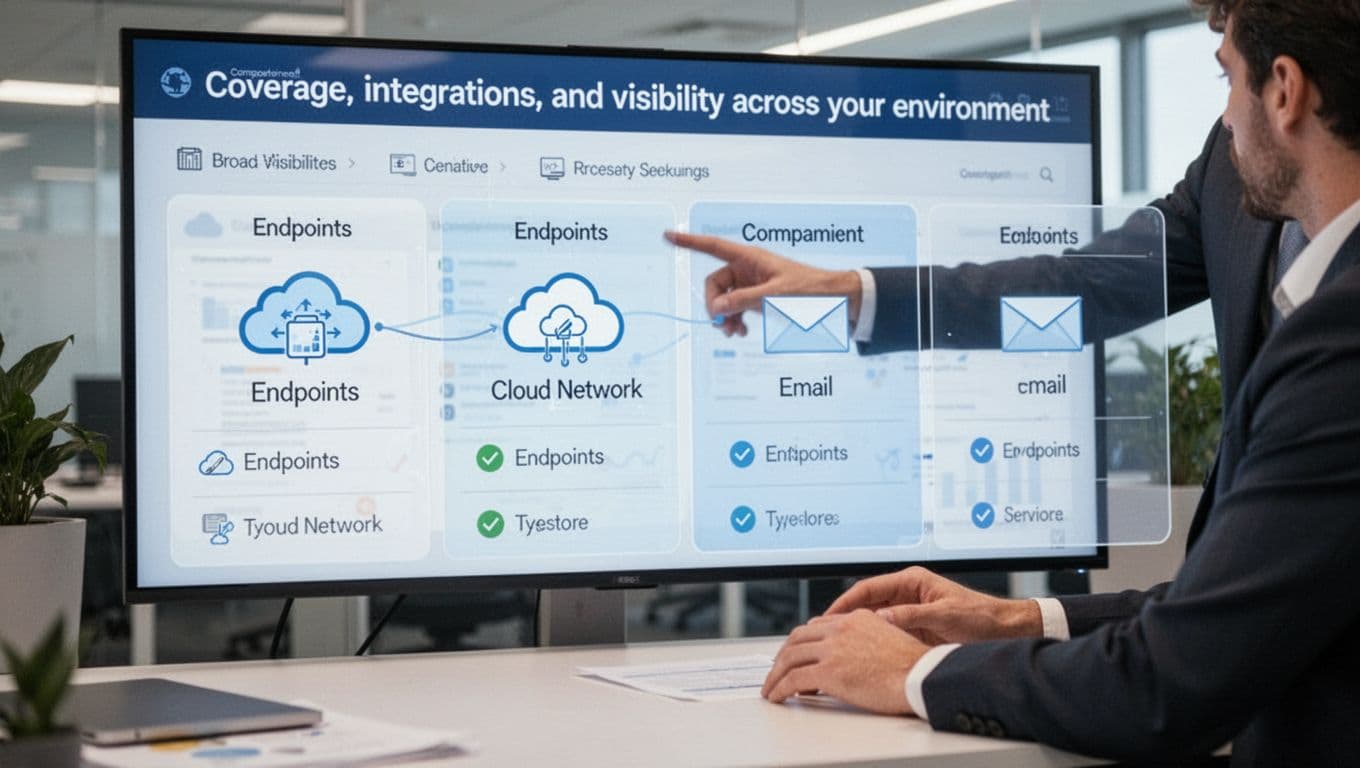
Coverage, integrations, and visibility across your environment
Start with visibility. Ask if the provider covers endpoints, cloud, network, identity, email, and key SaaS apps. If one layer is missing, attackers may use it as a blind spot.
Bring-your-own-tool support also matters. Some companies want MDR that works with their current Microsoft, Palo Alto, or SentinelOne stack. Others prefer a bundled service. In either case, you need to know what data the vendor can actually see and act on. This MDR solutions explainer does a good job showing how broad modern MDR coverage has become in 2026.
 ### Response speed, threat hunting, and real human expertise
Next, look past slogans and ask about speed. Mean time to detect and mean time to respond sound technical, but the idea is simple: how long until the vendor sees a threat, and how long until someone acts?
You also want true 24/7 SOC coverage, not an on-call model dressed up as round-the-clock service. Ask whether analysts actively hunt for hidden threats or only react to alerts. During a live incident, find out if your team can speak directly to analysts or only through a portal ticket.
Fast response is more than automation. It also depends on whether the vendor has permission to isolate devices, disable accounts, or block harmful activity right away.
SLAs, reporting, compliance, and contract details that get missed
This is where many buyers rush. Read the SLA, the escalation path, and the contract language around response actions. Some services sound full-service until you learn they only notify you and wait.
Ask what reports you’ll receive after an incident, how the service supports compliance work, and whether the provider holds certifications such as SOC 2 or ISO 27001. Data residency can also matter if your business has legal or industry rules to meet.
Independent feedback helps here. Before signing, check Gartner Peer Insights MDR reviews and compare customer comments on onboarding, analyst quality, and contract clarity.
Red flags are easy to miss in a sales cycle. Vague demos, unclear pricing, hidden fees for response work, and no proof-of-value option should slow you down.
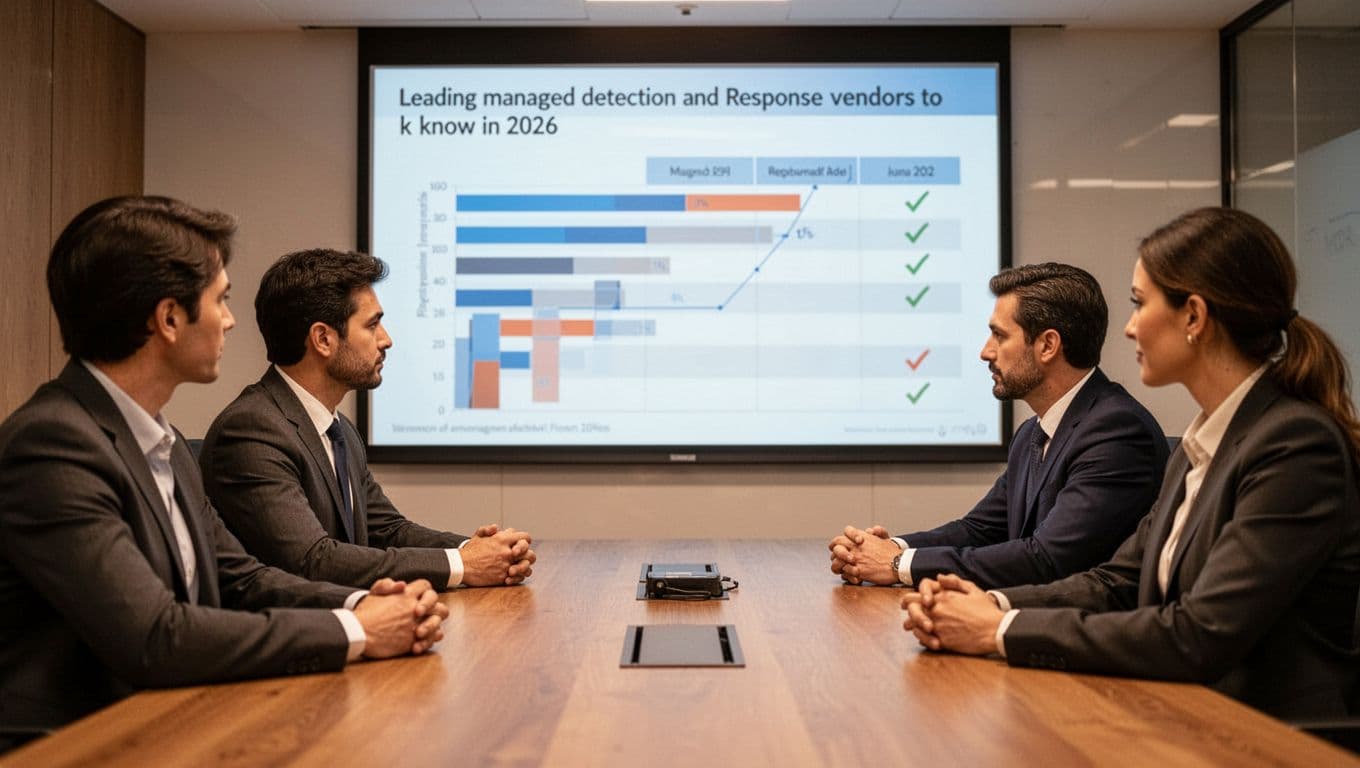
Leading managed detection and response vendors to know in 2026
The MDR market is crowded, so this isn’t a strict ranking. It’s a practical snapshot of well-known providers that security teams often compare in 2026. If you want a wider market view, Solutions Review’s 2026 MDR vendor roundup is a useful place to cross-check the field.
 ### CrowdStrike, Palo Alto Networks, and SentinelOne
CrowdStrike Falcon Complete stays near the top of many shortlists because of its strong endpoint depth and fast response reputation. It’s often a fit for larger organizations that want mature detection backed by a large team.
Palo Alto Networks remains a major player with Cortex and Unit 42 MDR options that appeal to enterprise buyers. Its broad platform view and AI-assisted alert reduction stand out for complex environments.
SentinelOne is popular with teams that want strong endpoint coverage plus automated response features like rollback. For buyers already invested in its platform, the managed service story can be compelling.
Sophos, Arctic Wolf, and Rapid7
Sophos MDR keeps showing up in mid-market conversations for a reason. It supports a broad set of integrations and offers full response options, which helps smaller teams that need more direct help.
Arctic Wolf is known for its concierge-style model. Many companies like the guided approach, especially when internal security resources are thin and leadership wants a clear point of contact.
Rapid7 appeals to organizations that want detection and response tied closely to broader security insight. Its approach can make sense for teams that also care about exposure, logging, and investigation depth.
Cynet and other MDR providers worth a closer look
Cynet often attracts lean teams that want an all-in-one approach across endpoint, cloud, network, and email without stitching together too many products. It can also appeal to MSP-focused buyers that want broad coverage with less overhead.
Beyond the biggest names, niche providers can be a strong fit for healthcare, Microsoft-heavy shops, or firms that care most about low alert volume and hands-on support. Market attention also shifts. For example, SC Media’s 2026 MDR service award coverage highlights how providers outside the usual enterprise shortlist still shape the space.
How to choose the right MDR vendor for your business
A well-known brand doesn’t always mean a good fit. The best managed detection and response vendors match your size, your stack, and your team’s ability to act during an incident.
Match the vendor to your size, tools, and security maturity
Large enterprises often need deep integrations, global coverage, and flexible workflows. Mid-size companies may care more about simple onboarding, direct analyst access, and fewer internal tasks.
Your current tools matter too. If you’ve already invested in a strong endpoint platform, a service that builds around it may cost less and roll out faster. If your team lacks response skills, a vendor with more hands-on containment can be the smarter pick.
Questions to ask before you sign a contract
Ask what happens during a real incident at night, not only during a daytime demo. Find out who can isolate devices, disable accounts, and approve response steps. Ask what data the service collects, how long it’s stored, and how pricing changes as your company grows.
Also ask whether the vendor offers a proof of value. A short trial can show how the team communicates, how noisy the service is, and whether analysts give advice your staff can use.
Common mistakes that lead to a poor MDR fit
One common mistake is buying based on logo recognition alone. Another is missing integration gaps until after deployment. Some teams also confuse a tool subscription with a true managed service, then feel surprised when no one actually takes action.
The best MDR fit is the one that works with your real risks and your real workflow, not the one with the loudest marketing.
Managed detection and response vendors can take a huge load off internal teams, but only if the service is built for the way you operate. Compare coverage, analyst access, response authority, and proof of value before you compare price.
The top names in 2026 include CrowdStrike, Palo Alto Networks, Sophos, SentinelOne, Arctic Wolf, Cynet, and Rapid7. Still, the best choice depends on your environment, budget, and how much help you need when an attack hits.
If your team is drowning in alerts, start with a short list and test how each provider handles real-world response. A well-chosen MDR partner can lower risk, reduce burnout, and help you move faster when every minute counts.