




Getting steady growth in 2026 is hard enough. Doing it while keeping customer acquisition costs under control is even harder.
That’s why many teams look for saas marketing services. In plain English, that means outside help with strategy, content, SEO, paid media, lifecycle email, and conversion work that turns attention into trials, demos, and revenue.
The best providers don’t stop at traffic. They connect every channel to the buying journey, so you can see what moves pipeline, what helps users activate, and what keeps customers around. Let’s break down what these services include, when to hire them, and how to choose the right partner.
What SaaS marketing services usually include
SaaS marketing isn’t one thing. It’s a set of services that should work together, like gears in the same machine.
A good provider looks at the full path from first touch to renewal. That means awareness, yes, but also demo requests, free-trial starts, activation, expansion, and retention. If a team talks only about clicks, something’s missing.
Strategy, positioning, and messaging that make the product easier to buy
Most SaaS growth problems start with weak clarity. Buyers land on the site, but they can’t tell who the product is for, what problem it solves, or why it’s better.
That’s where strategy work matters. SaaS marketing services often begin with ideal customer profile research, buyer pain points, competitor review, offer design, and positioning. Then they turn that into messaging your sales team can actually use.
When the message is clear, every part of the funnel gets stronger. Ads attract better-fit users. Landing pages convert more visits. Sales calls feel shorter because prospects already understand the value.

If you want a practical outside view of how positioning shapes SaaS growth, this B2B SaaS marketing guide offers useful context.
Demand generation channels that bring in qualified leads
Once the message is right, channel work starts to pay off. This usually includes content marketing, SEO, paid search, paid social, email nurture, webinars, partner marketing, and review site visibility.
Still, not every channel fits every SaaS company. A product-led startup with a free trial may lean on SEO, review platforms, and onboarding email. Meanwhile, an enterprise SaaS brand might get more from LinkedIn ads, webinars, and account-based outreach.
The channel mix should match your stage, budget, deal size, and sales motion. That’s the real job. A smart team doesn’t push every tactic. It picks the few channels most likely to move qualified pipeline now.
Good SaaS marketing services connect channels to revenue, not to vanity metrics.
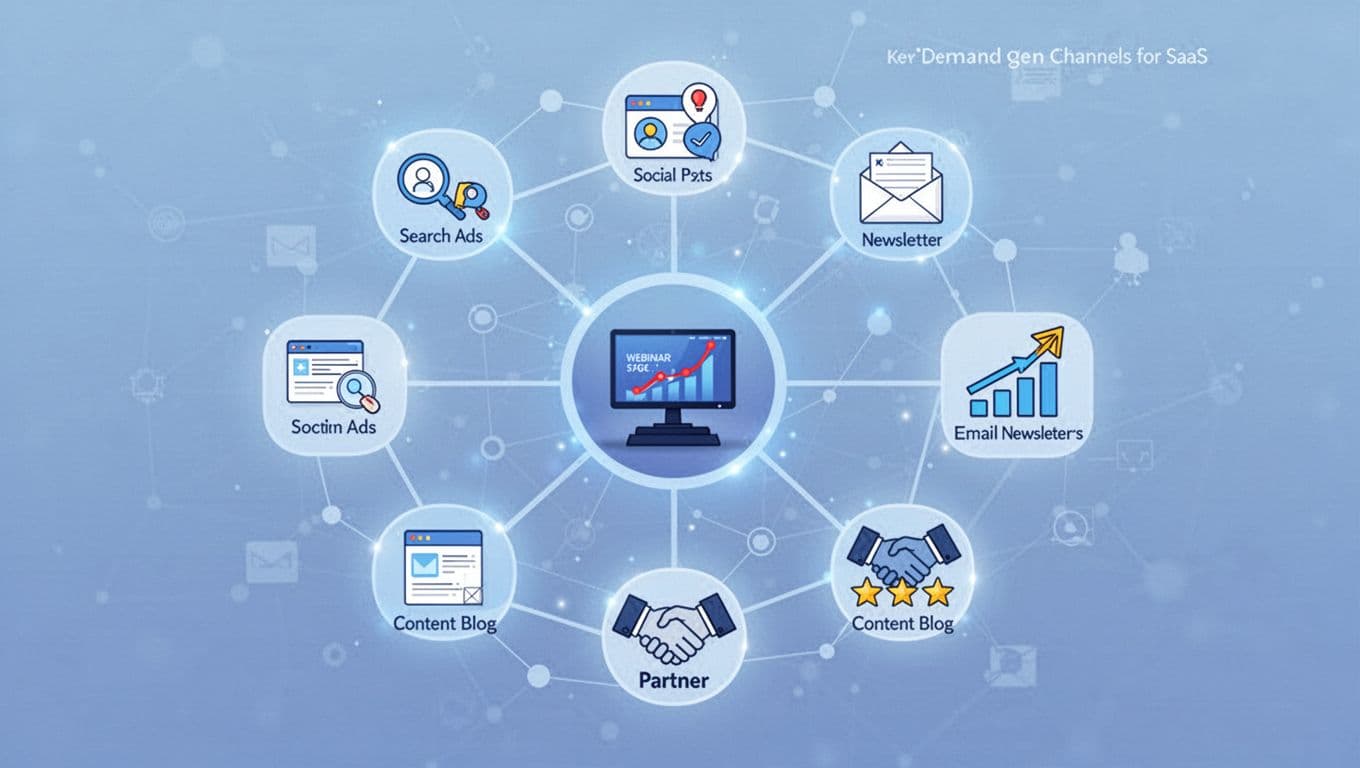
For a sharper look at modern channel selection, this SaaS demand generation playbook explains why pipeline quality matters more than lead volume.
How these services help SaaS companies grow faster and smarter
Hiring outside help isn’t about handing off busywork. It’s about getting a team that has seen the same funnel problems before and knows where to look first.
That matters because SaaS growth usually stalls in familiar places. Tracking breaks. Paid campaigns bring the wrong audience. Content ranks for low-intent terms. Trial users sign up, then never activate.
They shorten the learning curve and reduce expensive trial and error
An experienced SaaS team knows common mistakes before they get costly. They’ve seen reporting dashboards that hide the truth. They’ve seen demo forms ask for too much. They’ve seen ad budgets burn because nobody checked search intent.
As a result, you move faster. Instead of hiring one generalist and hoping for the best, you get access to specialists across strategy, content, paid media, SEO, email, and CRO. That can be far cheaper than building the same bench in-house.
Speed matters, but so does focus. When your team is buried in launches, sales support, and product updates, outside help can keep growth work moving.
They improve the full funnel, not just top of funnel traffic
Traffic alone doesn’t pay the bills. Growth comes from improving each step after the click.
That includes sharper landing pages, stronger calls to action, cleaner forms, better lead routing, smarter demo booking flows, onboarding emails that drive activation, and lifecycle programs that reduce churn. Even small gains stack up fast.
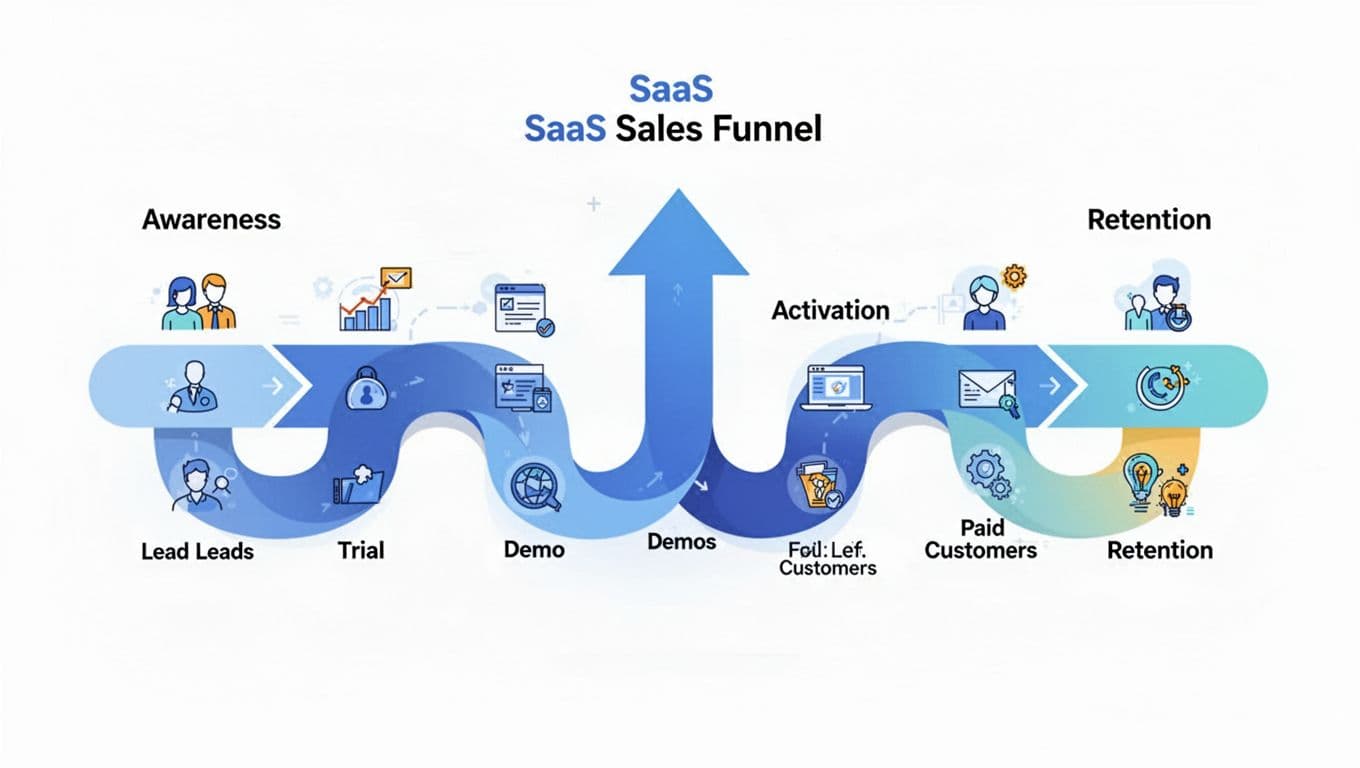
Think of it like fixing a leaky bucket. Pouring in more water helps for a moment. Sealing the holes changes the outcome. The same rule applies to SaaS funnels.
That broader view is why specialized support often beats a traffic-only approach. Many teams learn this the hard way, especially when CAC rises while conversion stays flat. This guide on bringing in a specialized SaaS agency speaks directly to that problem.
When to hire SaaS marketing services, and what kind of help you need
The right time to hire depends on your stage, your team, and your bottleneck. A seed-stage startup doesn’t need the same setup as a mature SaaS company trying to improve expansion revenue.
Still, a few patterns show up again and again.
Signs your team needs outside help now
If pipeline has stalled for months, you likely need a fresh view. The same goes for weak organic traffic, rising CAC, poor trial-to-paid conversion, or messy reporting that leaves everyone guessing.
Product launches are another signal. A launch without positioning, landing pages, email flows, and paid support often lands with a thud.
Here are common signs the timing is right:
- Pipeline is flat even though traffic is rising.
- Lead quality is weak and sales keeps rejecting handoffs.
- CAC is climbing faster than revenue.
- Trial users don’t convert because onboarding is thin.
- Reporting is unclear, so nobody trusts the numbers.
- The team is stretched, and important work keeps slipping.
You don’t always need a full-service partner, though. Sometimes you need one sharp fix, like better messaging or a cleaner paid search setup.
Agency, freelancer, consultant, or in-house team, what fits best
Each option has trade-offs. The best choice depends on budget, speed, depth, and how much management time you can spare.
Here’s a simple comparison:
| Option | Best for | Main strength | Main drawback |
|---|---|---|---|
| Freelancer | One channel or project | Low cost, flexible | Limited range |
| Consultant | Strategy and direction | Senior advice | Less hands-on execution |
| Agency | Multi-channel growth | Broader skill set, faster output | Higher monthly cost |
| In-house hire | Long-term ownership | Deep product knowledge | Slower and pricey to build |
Freelancers work well when you know the problem. A consultant helps when the team needs direction. An agency fits when several parts of the funnel need help at once. In-house makes sense when you need full control and steady volume.
If you’re weighing timing and fit, this 2026 guide to choosing a SaaS marketing agency can help frame the decision.
How to choose SaaS marketing services that actually deliver results
A polished sales deck doesn’t tell you much. What matters is how the team thinks, how it measures results, and whether it understands your sales motion.
The best partners ask sharp questions early. They want to know deal size, sales cycle, win rate, activation rate, retention, and where leads fall out. That’s a good sign.

Questions to ask before you sign a contract
Start with experience. Ask what kinds of SaaS companies they’ve helped, what stage those companies were in, and what changed after the work began.
Then go deeper. Ask about KPIs, reporting cadence, testing process, who owns the assets, and how often you’ll speak with the people doing the work. You should also ask what they expect to learn in the first month, because real operators think in hypotheses, not promises.
Look for clear thinking, not inflated claims. If someone guarantees dramatic revenue in a few weeks, be careful.
Strong partners talk about process, baselines, and trade-offs. Weak ones talk only about fast wins.
For more practical vetting ideas, this guide on choosing a B2B SaaS marketing agency is a helpful reference.
What good results look like in the first 90 days
The first 90 days should create clarity. You want cleaner messaging, better tracking, stronger landing pages, tighter audience targeting, and a focused channel plan.
You may also see better lead quality, stronger demo conversion, and early email improvements that lift activation. Those are meaningful wins. They create the base for bigger gains later.
What you should not expect is magic. Most SaaS teams need time to test offers, rebuild pages, fix attribution, and learn what each segment responds to. Early progress should feel steady and measurable, not flashy.
That’s the point of good SaaS marketing services. They turn scattered effort into a system you can trust.
Steady growth rarely comes from one trick. It comes from clear positioning, focused execution, and honest measurement working together.
If you’re considering saas marketing services, start with your biggest bottleneck. Don’t hire based on hype, trends, or the channel everyone else is talking about.
Choose a partner that understands how SaaS buyers move from problem awareness to paid use. That’s how marketing stops feeling like guesswork and starts producing growth you can repeat.