

Shipping fast on Kubernetes sounds simple, until one bad config lands in production. Then the whole promise of quick releases starts to feel like juggling knives.
That’s why kubernetes ci cd tools matter so much. CI/CD means your team builds, tests, and ships code in a repeatable way. Add Kubernetes to the mix, and those tools also need to handle containers, cluster state, rollbacks, and environment changes without constant babysitting.
In 2026, the field is clearer than it used to be. GitOps-first tools like Argo CD and Flux lead Kubernetes delivery. Meanwhile, GitLab CI, Jenkins, and Tekton cover pipeline-heavy workflows. Platform-style options like Devtron, Octopus Deploy, and Spinnaker fill other gaps. The goal here is simple, understand what each tool does, how they differ, and which one fits your team.
What to look for in Kubernetes CI/CD tools before you choose one
A good Kubernetes delivery tool should feel like a strong brake system in a fast car. Speed matters, but control matters more.
Start with Kubernetes-native design. If a tool treats Kubernetes like an add-on, daily work gets awkward fast. You’ll also want GitOps support, rollback options, drift detection, and clear views into each pipeline run. Multi-cluster support matters if you run staging, production, or regional clusters. Security matters too, especially RBAC, secrets handling, and audit trails.

Setup time is another filter. Some tools get you moving in a day. Others ask for weeks of design, plugins, and policy work. A recent look at best CI/CD tools for Kubernetes also highlights a growing shift toward self-service and less cluster complexity, which lines up with what many teams want now.
The features that save teams the most time and reduce mistakes
The time-savers are rarely flashy. They’re the boring features that stop bad days.
Automated rollback is one of them. If a deploy fails, the tool should help you recover quickly. Clear logs matter just as much, because nobody wants to hunt across five tabs during an outage. Reusable pipelines also pay off. Once one team builds a safe pattern, others should copy it instead of writing YAML from scratch.
Secrets handling matters because hidden credentials tend to become exposed credentials. Environment promotion helps too. Moving the same build from dev to staging to production cuts guesswork and avoids “worked on my cluster” drama.
The best tool isn’t the one with the longest feature list, it’s the one your team can trust at 4 p.m. on a Friday.
How team size and workflow shape the right tool choice
Small teams usually want fewer moving parts. They often do better with an all-in-one platform or a simple GitOps setup. If two developers also handle ops, they probably don’t want a tool that needs a full-time caretaker.
Platform teams think differently. They manage shared standards, many apps, and often several clusters. Because of that, they care more about policy, tenancy, reusable templates, and cluster-wide visibility.
Large enterprises add another layer, governance. They may need strict approvals, audit history, role separation, and release controls across business units. In that case, a simple tool can feel too light, while a flexible but high-maintenance tool may still make sense.
The top Kubernetes CI/CD tools to know in 2026
Some tools focus on delivery from Git. Others focus on build and test pipelines. A few try to cover the whole path from commit to production.
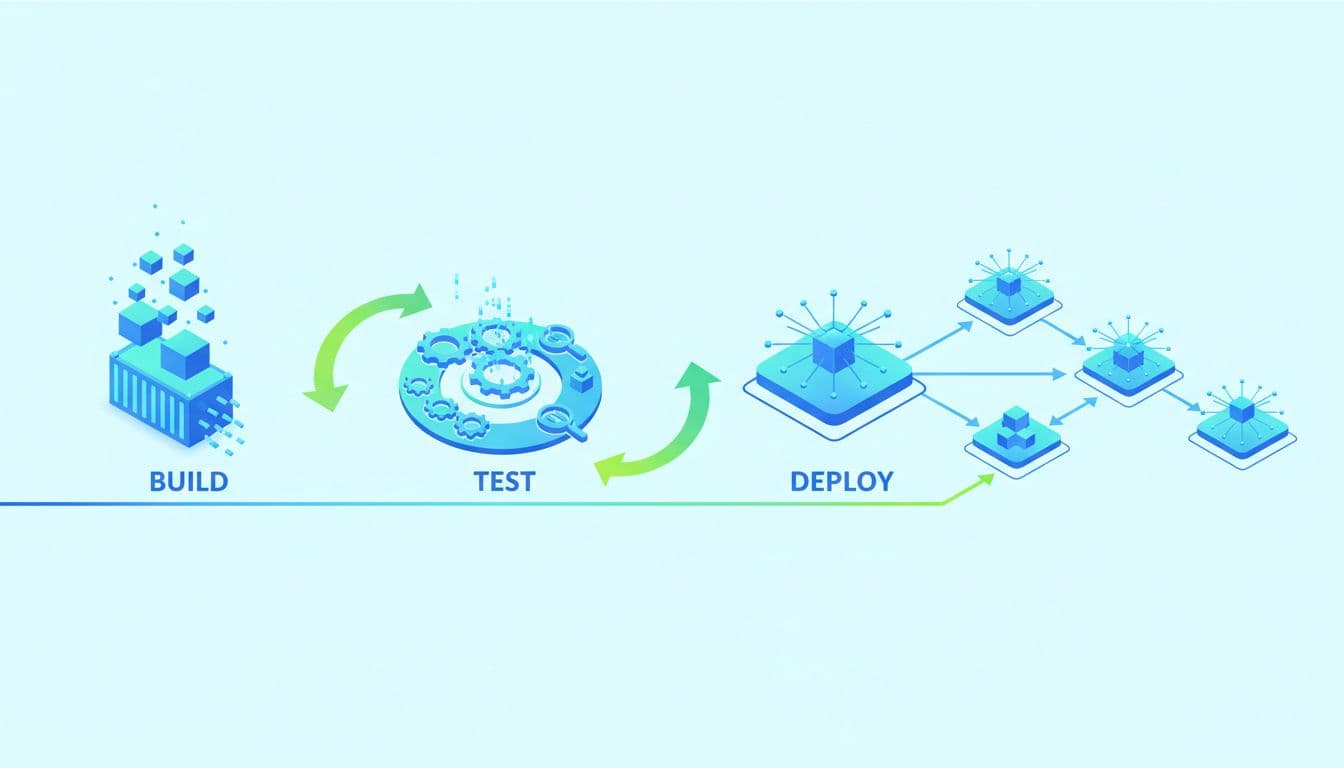
Argo CD and Flux, the leading GitOps choices for Kubernetes
Argo CD and Flux both treat Git as the source of truth. You store manifests or Helm settings in Git, and the tool keeps the cluster aligned. That makes rollbacks cleaner, drift easier to spot, and change history easier to review.
Argo CD is often the easier entry point for teams that want visibility. Its UI helps people see sync state, app health, and deployment history without digging through controllers. It also works well for multi-cluster setups. The main limit is scope, it handles delivery, not full CI, so you still need another tool to build and test.
Flux takes a more controller-driven approach. Many teams like it because it feels close to core Kubernetes patterns. It also supports flexible config sources and can fit teams that prefer CLI-based workflows. On the other hand, some teams find it less approachable at first because the visibility model feels more distributed. This Argo CD vs Flux comparison does a solid job of showing where that difference matters.
GitLab CI, Jenkins, and Tekton for building and running pipelines
These tools sit closer to classic CI, but each one fits Kubernetes differently.
GitLab CI works well for teams that want one place for source control, pipelines, security checks, and deployments. It’s easier to adopt when your code already lives in GitLab. You get good built-in flow, but deep Kubernetes delivery patterns may still feel cleaner when paired with GitOps.
Jenkins is the old toolbox in the garage. It can do almost anything if you’re willing to wire it together. That flexibility still makes it useful, especially in mixed environments. Still, plugin sprawl, upgrades, and maintenance can turn into a tax your team keeps paying.
Tekton is far more Kubernetes-first. Pipelines run as native Kubernetes resources, which appeals to teams that want modular, cloud-native workflows. The tradeoff is complexity. It’s powerful, but it often asks for more design work up front. If you’re weighing classic versus Kubernetes-native CI, this 2026 GitLab CI vs Jenkins research gives useful background.
Spinnaker, Octopus Deploy, and Devtron for advanced delivery needs
These tools tend to show up when plain pipelines are not enough.
Spinnaker fits complex release flows, especially in larger enterprises and multi-cloud setups. It supports advanced deployment strategies, like canary and blue-green releases. That power comes with weight, though. Setup and upkeep can feel heavy for smaller teams.
Octopus Deploy shines in release management. If you need strong control across many environments, customers, or approval steps, it earns attention. However, many teams pair it with a separate CI tool because it’s stronger on deployment than build.
Devtron appeals to Kubernetes teams that want a more guided platform. It combines CI/CD, app visibility, and cluster operations in a friendlier package than older DIY stacks. The tradeoff is less raw flexibility than assembling everything yourself. For teams trying to cut YAML burden, this guide on simplifying the Kubernetes CI/CD pipeline explains why platform-style tools keep gaining ground.
How the most popular tools compare in real world use
Here’s a quick side-by-side view of how these tools usually feel in practice.

| Tool | Easiest fit | GitOps strength | Kubernetes fit | Visibility | Maintenance |
|---|---|---|---|---|---|
| Argo CD | Growing teams | High | High | Strong UI | Low to medium |
| Flux | Platform teams | High | High | More CLI-centered | Low to medium |
| GitLab CI | All-in-one teams | Medium | Medium | Strong | Medium |
| Jenkins | Custom workflows | Low | Medium | Varies by setup | High |
| Tekton | Kubernetes-first CI | Medium | High | Good, but technical | Medium to high |
| Spinnaker | Enterprise delivery | Medium | Medium | Strong | High |
| Octopus Deploy | Controlled releases | Low | Medium | Strong | Medium |
| Devtron | Developer-friendly K8s teams | Medium to high | High | Strong | Low to medium |
The big picture is simple. Argo CD and Flux lead pure GitOps delivery. GitLab CI balances convenience and coverage. Jenkins and Tekton give more control, but they ask for more care.
A broader CI/CD tools comparison for Kubernetes in 2026 shows the same pattern, teams are moving toward tools that reduce manual cluster work without hiding too much.
Best picks for beginners, growing teams, and large platforms
Beginners usually do best with GitLab CI, Argo CD, or Devtron. Those options reduce setup pain and give better day-to-day visibility.
Growing teams often land on Argo CD plus a separate CI tool, or on Devtron if they want more built-in help. That gives room to scale without jumping straight into a highly custom stack.
Large platform teams often prefer Flux, Tekton, Spinnaker, or a heavily tailored Jenkins setup. Those choices make more sense when you already have strong internal platform skills and strict policy needs.
Common tradeoffs that matter more than feature lists
Simplicity and control often pull in opposite directions. The easiest tool to start may not support every edge case later. On the flip side, the most flexible tool may slow you down right now.
Speed and governance also clash. Fast self-service feels great until audit needs show up. Open-source freedom sounds attractive too, but paid platforms can save real time if your team is small.
That’s why hype is a poor buyer. Your daily workflow should drive the choice, not a popularity chart.
How to choose the best Kubernetes CI/CD tool for your team
Start with your current stack. If your team already lives in GitLab, adding GitLab CI may be the easiest move. If you want Git to drive deployments, Argo CD or Flux probably belongs on the shortlist. If developers need a more guided experience, Devtron may fit better.
Next, test real tasks, not demos. Try a rollback. Review the logs. Deploy to staging, then promote to production. Check whether the tool fits your RBAC model, cluster count, and release process.
Questions to ask before you commit to a tool
- Do we need GitOps, or do we mostly need CI pipelines?
- Who will maintain it after the first rollout?
- How many clusters do we manage today, and next year?
- How important is audit history for security or compliance?
- Do developers need self-service deployments without platform-team handholding?
The right answer is rarely the fanciest option. It’s the tool your team can run well, improve over time, and trust when a deploy goes sideways.
There’s no single best choice for every team. Argo CD and Flux stand out for Kubernetes delivery, while GitLab CI, Jenkins, Tekton, Spinnaker, Octopus Deploy, and Devtron each fit different needs. Shortlist two or three tools, test them in a real staging workflow, and let your actual release process pick the winner.