
Steady growth is hard to build when your team is already stretched thin. Many SaaS brands know search matters, but they don’t have the time, technical depth, or content system to scale it well.
That’s where saas seo agencies come in. The best ones handle the messy parts that stall growth, from technical fixes and buyer-intent content to authority building and pages built to convert. In 2026, that work also includes visibility in AI answer tools, not only classic search results.
Choosing the right partner takes more than scanning a list of agency names. You need to know what makes a SaaS-focused firm different, what services matter, and which signs point to a good fit.
What makes SaaS SEO agencies different from general SEO firms
A general SEO firm might celebrate traffic growth while your sales team sees no lift in demos. SaaS SEO works on a different scoreboard. Revenue is recurring, sales cycles are longer, and many visitors need weeks or months before they convert.
That changes the work. Agencies that know SaaS understand product-led growth, free-trial funnels, sales-assisted deals, and complex buying committees. They know why a feature page can rank, persuade, and support paid campaigns at the same time. They also know why comparison pages, alternatives pages, and use-case pages often drive stronger commercial value than broad blog traffic.
Several 2026 roundups, including Grow and Convert’s evaluation of B2B SaaS agencies, stress the same point: SaaS SEO needs tighter alignment with buying intent and revenue.
They focus on signups, demos, and pipeline, not just rankings
Good rankings help, but they aren’t the finish line. Strong SaaS agencies track qualified traffic, free-trial signups, demo requests, sales-qualified leads, and revenue influence.
That changes which keywords matter. A term with 500 monthly searches can beat one with 20,000 if it brings buyers who are close to action. As a result, SaaS specialists spend more time on intent and less time chasing vanity metrics.
If an agency can’t connect SEO work to trials, demos, or pipeline, the reporting will stay shallow.
They build content around the full buyer journey
SaaS buyers rarely jump from first click to purchase. Most move through stages, and content needs to meet them at each one.
Top-of-funnel content speaks to the problem. A post about reducing customer churn or automating invoice follow-up fits here. Middle-of-funnel pages help buyers compare options and understand use cases. Bottom-of-funnel pages close the gap with “alternative to” pages, integration pages, pricing support content, and product comparisons.
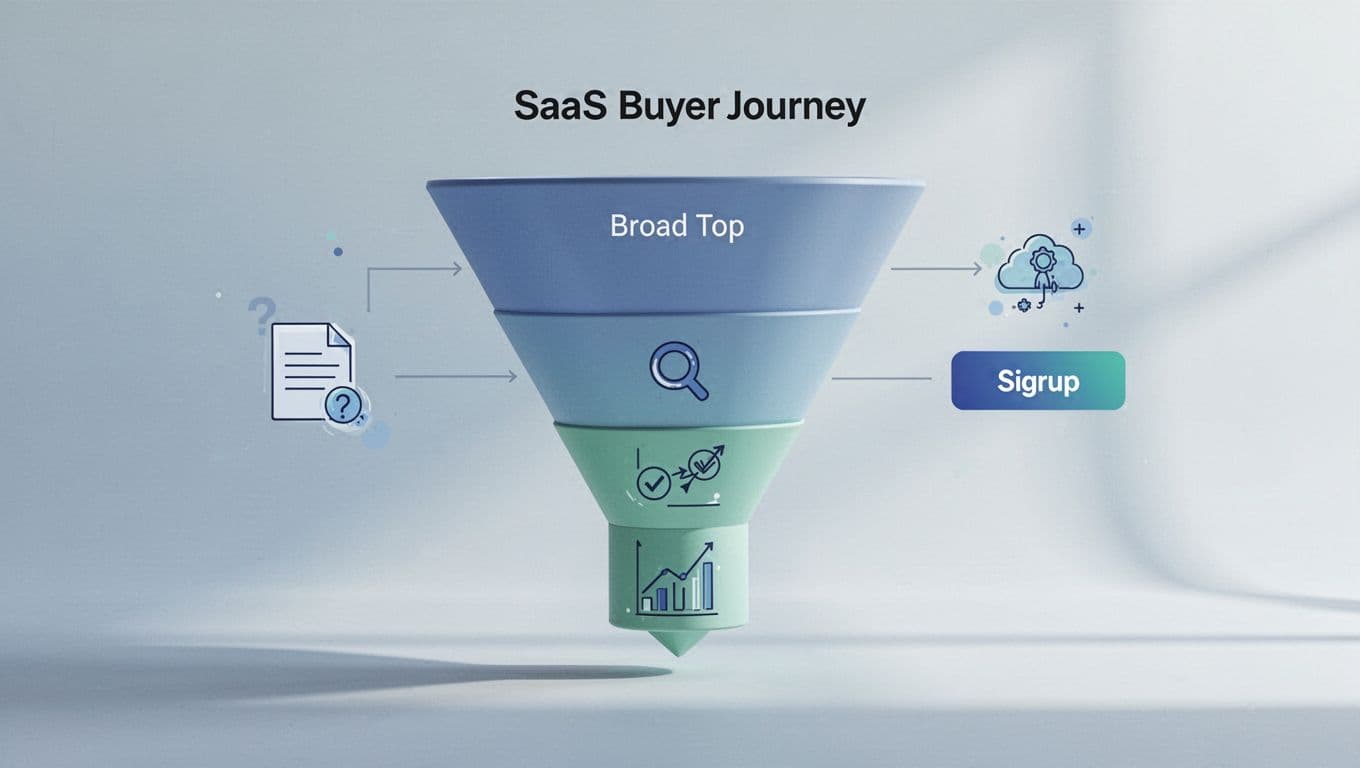
When agencies map content this way, they support both self-serve signups and sales-led deals. That balance matters because SaaS growth usually lives in both worlds.
The core services top SaaS SEO agencies usually offer
A real SaaS SEO engagement is broader than blog production. In 2026, the strongest programs mix technical work, content planning, product page improvements, digital PR, and growing presence in AI-driven search results. Exalt Growth’s 2026 roundup highlights this shift toward both Google visibility and AI answer visibility.
Technical fixes, site structure, and product page optimization
SaaS sites often have technical baggage. JavaScript-heavy pages, duplicate templates, poor internal linking, weak navigation, and indexing issues can block growth before content has a chance.
A good agency starts by fixing crawl problems, cleaning up site structure, improving page speed, and helping search engines understand key pages. They also work on feature pages and solution pages so they rank for the right terms and convert visitors once they arrive.
Schema, internal links, and page hierarchy matter here. So does the user path. A feature page that ranks but sends people nowhere useful still wastes traffic.
Content strategy built around buyer intent
Keyword research for SaaS should start with jobs to be done and pain points, not a giant export from a tool. The question isn’t only “What gets searched?” It’s also “What problem is the buyer trying to solve right now?”
That’s why strong agencies build topic clusters around real buying paths. They create educational content for early research, then support it with use-case pages, comparison pages, alternatives pages, migration pages, and industry pages. This helps brands capture demand at different stages without filling the site with fluff.
For teams with both self-serve and sales-led motions, the best strategy bridges both. A visitor might discover the brand through a blog post, compare options on a landing page, then book a demo after reading a product-focused asset.
Authority building through digital PR, links, and brand mentions
Search engines still use links as trust signals. At the same time, AI answer tools rely heavily on widely cited brands and trusted sources. That means authority building now goes beyond classic outreach.
Many SaaS SEO agencies run digital PR campaigns, publish original data, pitch expert commentary, and earn mentions on relevant industry sites. Siege Media is often associated with strong content and digital PR execution, while agencies with an AEO focus put more weight on citations and recurring brand mentions.
This work is slower than publishing articles, but it compounds. One solid data study or category report can support rankings, referral traffic, and brand recall at once.
How to choose the right SaaS SEO agency for your stage and budget
The right agency for a seed-stage startup usually isn’t the right one for a large enterprise team. Scope, speed, reporting needs, and internal resources all change with growth.
Pricing varies, but many SaaS-focused retainers in 2026 land between $5,000 and $20,000 per month. Smaller audits may cost less, while enterprise programs often run higher. For context, First Page Sage’s 2026 agency overview and other market sources show wide pricing bands based on scope and complexity.
This quick comparison helps set expectations:
| Company stage | Typical SEO need | Rough monthly range |
|---|---|---|
| Early-stage SaaS | Basic technical cleanup, focused content, a few key pages | $3,000 to $6,000 |
| Growth-stage SaaS | Ongoing content, authority building, stronger reporting | $5,000 to $20,000 |
| Enterprise SaaS | Complex site architecture, global SEO, deep coordination | $10,000+ |
The main point is simple: buy for fit, not for the lowest retainer.
Ask for proof that they can drive revenue, not just traffic
Case studies should show more than keyword gains. Look for examples tied to demos, free trials, pipeline, SQLs, or revenue growth.
A ranking screenshot can look great and still hide weak business value. On the other hand, a smaller traffic lift that improves demo volume is usually the better sign. Agencies with real SaaS experience tend to frame results in business terms because that’s how their clients operate.
Match the agency to your growth stage and team setup
A founder-led startup may need an agency that can own strategy and execution with little oversight. Mid-market teams often want a partner that works closely with in-house content, product marketing, and demand gen. Enterprise buyers may need support across markets, stakeholders, and long approval cycles.
Also check how the agency works with sales ops and lifecycle teams. In SaaS, SEO doesn’t live alone. It feeds revenue systems, CRM reporting, and product activation.
Watch for red flags before you sign a contract
Guaranteed rankings are a bad sign. So are vague monthly reports, one-size-fits-all packages, and weak examples from actual SaaS clients.
Pay attention to process as well. You want to see how they research, prioritize, ship work, and measure impact. If that stays fuzzy during the sales process, it usually stays fuzzy after kickoff.
Another warning sign is an agency that pushes only blog content. SaaS growth often depends on commercial pages, not only education content.
A quick look at well-known SaaS SEO agencies in 2026
Readers comparing saas seo agencies will keep seeing a handful of names. That doesn’t mean one firm is best for everyone. It means a few have built clear reputations around different parts of the SaaS growth engine.
Lists from Programming Insider’s 2026 rankings and Minuttia’s 2026 agency roundup show how varied this market has become.
What different agencies tend to specialize in
Minuttia is widely known for B2B SaaS strategy and content depth. It often comes up in conversations about thoughtful research and strong editorial planning.
Omniscient Digital is known for category authority and content programs built for serious B2B brands. Teams that want a deep editorial engine often look there first.
PipeRocket Digital gets attention for tying SEO more closely to pipeline and revenue. That matters for companies that want search reported in the same language as sales.
Rock The Rankings is often mentioned for SaaS-only focus, technical execution, and AI answer optimization. In 2026, that angle matters more because buyers now discover software through Google, ChatGPT, Perplexity, and similar tools.
Siege Media is still a big name for content-led growth, digital PR, and authority building at scale. For brands that need strong creative plus link-worthy assets, that’s a clear strength.
You may also see broader comparison posts such as Uplift GTM’s list of agencies for MRR growth. Those roundups are useful for research, but the final choice still comes down to fit, execution style, and how the agency measures success.
The best saas seo agencies do more than move rankings up a chart. They help the right buyers find your product, understand why it fits, and take the next step.
That’s why the smartest comparison is not agency versus agency on paper. It’s agency fit versus your goals, stage, and team. When you choose based on SaaS experience, service match, reporting quality, and real business outcomes, search becomes a growth channel that compounds.